
Every system in ProPick was designed and built here.
Mechanical, electrical, controls and software — all four came from the same bench, within sight of the machining centers.
What could that build for you?
ProPick is the evidence, not the thing on offer here. The same way of working — carrying a machine from an idea through mechanics, electronics, controls and software until it runs on its own, without handing it between firms — is available for machines that are not ours.
It suits projects where the handoffs are the risk. Something that has to be designed, built, wired and programmed, where splitting the work between a design firm, a fabricator and an integrator leaves nobody owning whether the thing actually works.
Machines that have to work unattended
An autonomous machine has nowhere to hide. It runs in a building full of people and equipment, on its own, and every discipline has to hold up at once. A clever mechanism with weak controls is not a machine, and neither is good software bolted to a frame that flexes.
ProPick went from concept to a working, patented machine under one roof — structure, drives, power distribution, control architecture, motion, perception, and the software that ties it together.
The machining side is built on that same work. We specified the equipment, the workholding and the quality software ourselves, because we have to live with the results.
What the engineering side does
Machine and mechanism design
Structures, drivetrains, mechanisms and fixturing, designed with the manufacturing method already decided. Parts get drawn to be made, not drawn and then argued about.
Power and control hardware
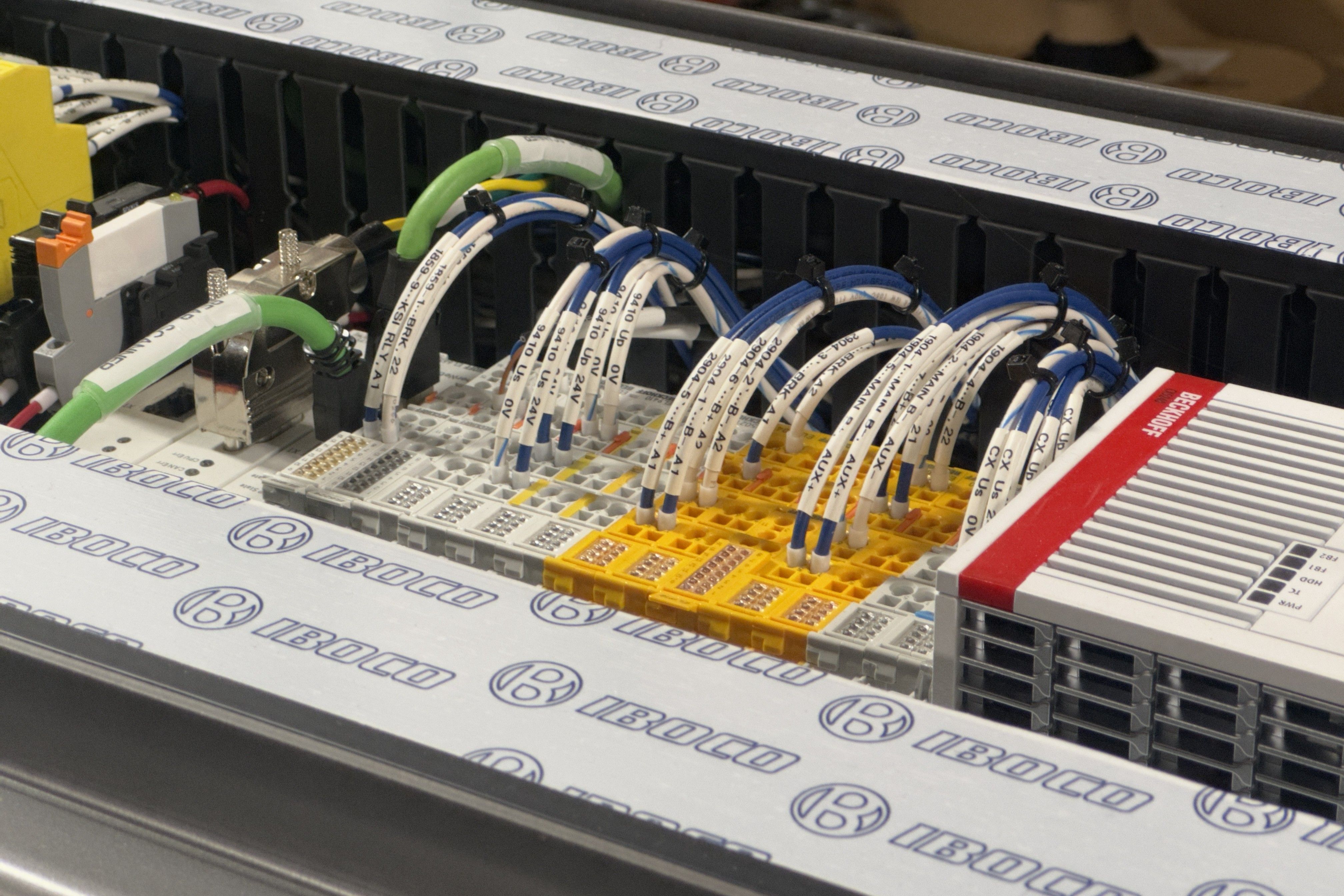
Power distribution, drive selection, cabinet layout and machine wiring, built to be diagnosed by someone other than the person who built it.
PLC and machine integration
Beckhoff PLC programming and machine integration, including motion coordination and tying new equipment into what a plant already runs.
Application software
The layer that makes hardware useful — sequencing, operator interfaces, and the data an operation needs to see. Our own quality management software came out of this.
One room, both jobs
This is one open space with an office at the front. The machining centers, the granite plate and the bench where robots get built are all within sight of each other. Nothing here is a separate department.
A part goes from CAM to the machine to assembly without leaving the room. A fixture that does not work gets fixed the same afternoon, a few steps from where it was drawn.
For customers that shows up as fewer handoffs. There is no drawing office to brief and no shop to translate for, because design and machining happen in the same room.
- Design, machining and assembly in one room
- Machined prototypes without an outside supplier in the loop
- Controls and integration work for machines already on your floor
- Fixture and tooling design, proven in our own shop
Engineering work is taken on a project at a time, and scope gets agreed before anything starts. If you have a machine problem that doesn't conform to the obvious approaches, describe it and we will tell you whether it is a fit for our services.
Next step
Talk through an engineering problem
Describe the machine, the constraint, and what you have already tried. You hear back from an engineer who would do the work, not from a coordinator.